
Are you worried a jeweler might expose your replica watch? That moment of handing it over can be stressful. Let me give you the honest, inside scoop.
Yes, a trained jeweler can almost always tell if a watch is a replica. They use magnification1 to spot tiny differences in engravings, fonts, and especially the movement2. While modern replicas are visually stunning, they can't match the microscopic perfection of a genuine watch.
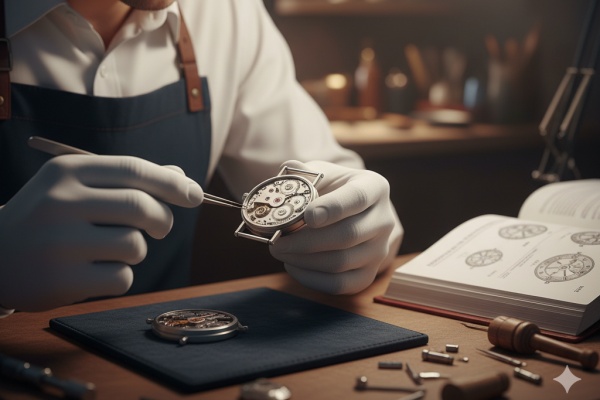
As a long time seller, I admire the incredible craftsmanship of today's replica watches. They have truly reached a level where, to the naked eye, they are indistinguishable from the real thing. But I also believe in being transparent with my clients. You deserve to know the full story. A jeweler's job is to know the difference between authentic and fake, and they have the training and tools to do so. Let's break down exactly what they look for and how they can tell.
What tools do jewelers use to spot fakes?
You think your watch looks flawless. But a jeweler sees things you can't. What special tools give them this ability? I'll let you in on their secrets.
Jewelers primarily use a 10x magnification loupe3, a small magnifying glass. For more detailed inspections, they may use a microscope4. These tools make tiny details, completely invisible to you and me, stand out clearly. Their trained eye knows exactly where to look.
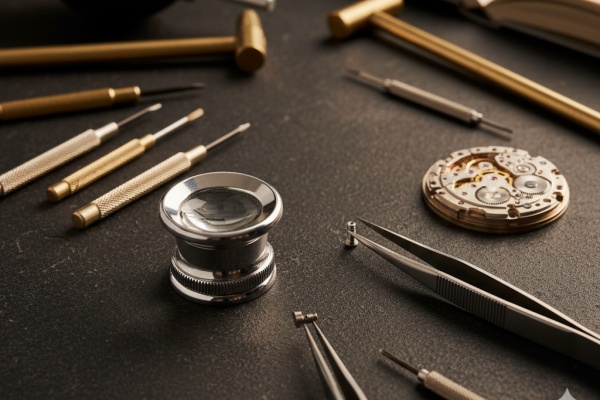
It’s not about magic; it’s about magnification. A professional doesn't just glance at a watch. They perform a detailed examination, and their tools are key to this process.
The Standard Jeweler's Loupe
The 10x loupe is the industry standard. It's powerful enough to reveal the fine details without being too overwhelming. With it, a jeweler can check the printing quality on the dial, the sharpness of the hands, and the application of the luminous material on the markers. They can see if the edges are crisp or slightly blurry, which is often a sign of a replica.
The Microscope
For a definitive authentication, especially for a high-value watch, a jeweler might place it under a microscope. This allows them to inspect the machining work on the movement2 parts and the precise cut of the ruby jewels5. Under this level of magnification, the difference in manufacturing quality between a multi-million dollar factory and a replica factory becomes undeniable.
Are there specific details that give away a replica?
Your watch looks perfect from a foot away. But what happens under close inspection? There are specific "tells" that experts look for, and I'll show you the biggest one.
Yes, the engravings are one of the most common giveaways, especially the serial number on a Rolex. Genuine brands use specialized, expensive equipment for this. Replica factories use cheaper methods, and the difference is obvious under magnification. The font and depth will not match.
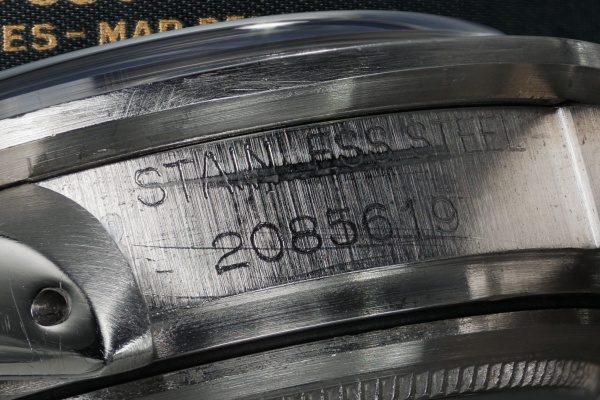
I want to share a very specific example that I've seen many times. It's one of the best ways to understand the difference between genuine and replica manufacturing. Let’s look at the serial number engraved between the lugs on a Rolex.
The Engraving Method
The key difference comes down to how the number is carved into the steel. A genuine Rolex uses a specialized milling cutter that digs into the metal. A replica factory can't afford this tool, so they use a laser to etch the surface. The result is completely different when magnified.
Here is a table to make it simple:
| Feature | Genuine Rolex | High-Tier Replica |
|---|---|---|
| Engraving Method | Mechanical Milling | Laser Etching |
| Font Appearance | Rough, with a slight texture | Smooth and clean |
| Depth | Deep and distinct | Shallow and less defined |
A jeweler will see the smooth, shallow laser font and know immediately that it’s not from the Rolex factory. It’s a tiny detail, but it’s a definite tell.
Is the movement2 the easiest way to spot a replica?
The outside of your watch is a masterpiece. But the inside, the engine, is a different story. Does the movement hold the key to spotting a fake?
For any expert, the movement is the ultimate test. Opening the case back reveals the heart of the watch, which is incredibly expensive to replicate perfectly. Small differences in the regulator6, the engravings, and the jewel settings are instant proof of a replica.
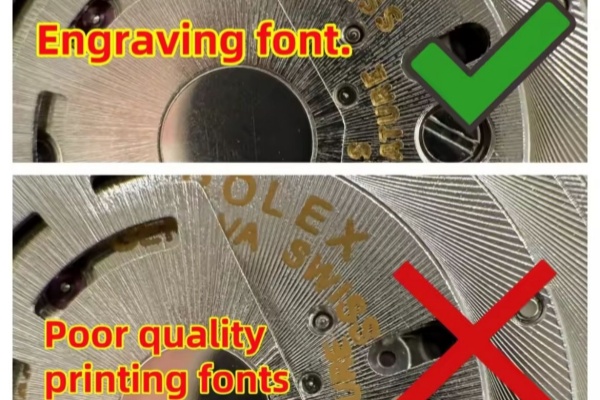
If a jeweler is ever in doubt after inspecting the outside of a watch, they will ask to open the case back. The movement tells no lies. While top-tier replicas use impressive "clone" movements that look very similar, they can't match the finishing and precision of a genuine Swiss caliber.
Telltale Movement Details
There are several things a watchmaker looks for inside the case.
- The Regulator: On many ETA-based movements, the system used to regulate the watch's timing (called the "fast/slow needle" or regulator) looks visually different on the replica version compared to the genuine one.
- Movement Engravings: Just like the serial number, the brand name and caliber number engraved on the movement's bridges will have a different font and quality on a replica.
- The Ruby Jewels: The center axis of the synthetic rubies used in the movement can have a different shape or finish under a loupe. It's a microscopic detail that shows a different manufacturing process.
Conclusion
A trained jeweler with a loupe can spot a replica. They see tiny details in the engravings and movement. For everyday life, however, your high-quality replica is perfect.
---Learn how magnification techniques enhance a jeweler's ability to detect subtle differences in watches. ↩
Find out why the internal mechanics of a watch are crucial for determining its authenticity. ↩
Discover the essential tool that jewelers rely on for detailed watch inspections. ↩
Explore the advanced techniques jewelers use to ensure the authenticity of high-value watches. ↩
Learn about the importance of ruby jewels in determining the quality of watch movements. ↩
Understanding the regulator can provide insights into the precision of a watch's movement. ↩