
You hear about fakes from Turkey, Thailand, and Dubai. It's a confusing global market, leaving you unsure of the true source of these goods.
China produces over 95% of the world's counterfeit goods1. From luxury watches2 and bags to designer shoes3, a single region in China is the undisputed epicenter of the entire global replica industry4, dwarfing all other countries combined.
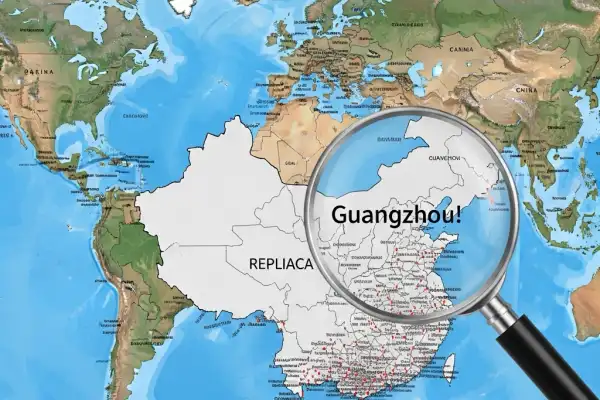
After more than a decade in this business, I've seen customers get confused by the idea of a scattered global market for fakes. The reality is much more concentrated. While you might buy a fake Rolex on a beach in Thailand, the supply chain for virtually every single high-quality replica on Earth starts and ends in one country. This concentration is the most important factor in understanding the quality, price, and availability of these goods. Let's look at why this is the case.
Why is China the world's factory for counterfeits?
It seems impossible for one nation to hold such a powerful monopoly. You might wonder what makes China so uniquely suited to dominate this massive global industry.
China earned the title "the world's factory" by mastering mass production5 for legitimate goods. This industrial might, combined with historically weaker intellectual property (IP) protection6, creates the perfect environment for a thriving, high-quality replica industry.
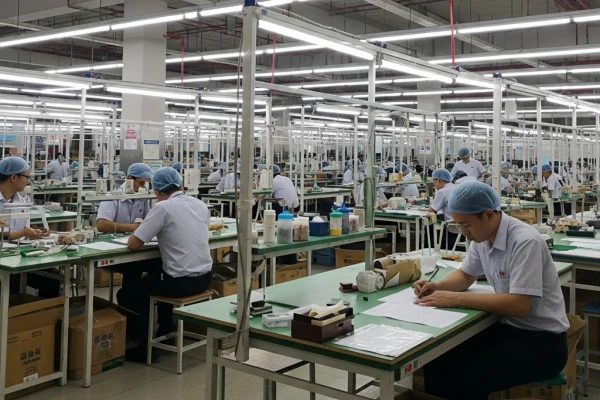
China's dominance isn't an accident; it's the result of a unique "perfect storm" of economic and industrial factors that can't be found anywhere else. It’s not just that they are willing to make fakes; it's that they are the only ones who can do it so well on such a massive scale.
The Industrial Ecosystem
China is the workshop of the world. They produce components for everything from iPhones to luxury car parts. This means the machinery, the skilled labor, and the raw material supply chains are already in place. A factory that can produce a high-precision steel case for a legitimate brand can use the same equipment to make an identical case for a replica. They aren't starting from scratch; they are leveraging a multi-trillion-dollar industrial base. This allows them to use the same materials and manufacturing processes as the genuine brands, creating a product that is far superior to what any other country could attempt.
The Economic and Legal Environment
Another key factor is the business environment. While IP laws are strengthening, the enforcement has historically been less aggressive than in the West. This created a lower-risk environment for these factories to invest and grow. More importantly, this industry is not a small, hidden operation. It's a massive economic driver7. It's estimated that this entire counterfeit supply chain—from parts suppliers to assemblers to sellers—provides a livelihood for tens, if not hundreds, of thousands of people in the Guangzhou8 region. This makes it a complex socio-economic issue that is deeply embedded in the local economy.
Are counterfeits from other countries any good?
You've seen the street markets in Turkey or Thailand filled with fakes. They look tempting and incredibly cheap, making you question if you can get a good deal there.
Generally, no. Counterfeits from tourist hubs are low-grade products made for quick, opportunistic sales. They use cheap materials, inaccurate designs, and unreliable movements. They are not in the same league as the super clones9 produced in China.
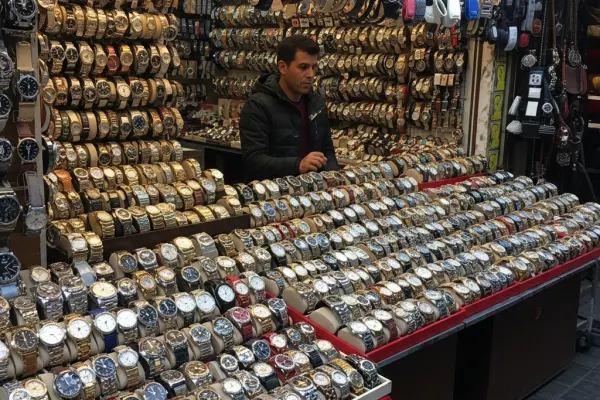
This is a common point of confusion that I have to clear up for new buyers all the time. The watch you buy for $100 from a stall in Istanbul is a completely different product from a $500 super clone that I would source from Guangzhou. They are not even in the same category. The tourist fakes are designed to fool an unsuspecting eye for a few minutes and make a quick sale. They often have plated-brass cases that feel light, cheap mineral glass that scratches, and rattling bracelets. The movements are often the cheapest possible quartz tickers, even in watches that are supposed to be automatic. These items are essentially disposable fashion accessories. A super clone from China, on the other hand, is a piece of horological engineering designed to replicate the genuine article in every possible aspect, built to last for years.
| Feature | China Super Clone | Tourist Market Fake |
|---|---|---|
| Material | Solid 904L/316L Steel | Plated alloy, feels light |
| Movement | 1:1 Clone Automatic | Cheap Quartz or basic automatic |
| Crystal | Scratch-proof Sapphire | Mineral Glass, scratches easily |
| Goal | Perfect 1:1 Replication | Deceive for a quick sale |
| Lifespan | Years, can be serviced | Weeks or months |
How does this concentration in China affect quality?
If everything comes from one place, you might think quality would stagnate. How does this concentration actually lead to the incredible quality of today's top replicas?
This concentration creates a hyper-competitive internal market. Dozens of top factories in Guangzhou are in an "arms race," constantly buying each other's products to find flaws and release a better version. This fierce competition rapidly drives quality upward.
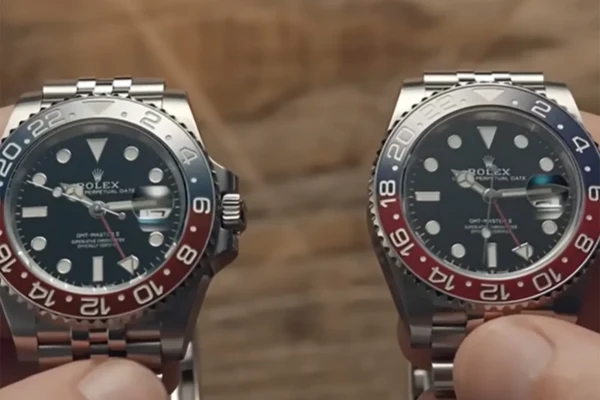
The fact that the entire industry is located in one city doesn't lead to a lazy monopoly. It does the exact opposite. It creates a pressure cooker of competition that is the single biggest driver of quality. Think of it like Silicon Valley for replicas. All the talent, suppliers, and knowledge are in one place.
When VS Factory (VSF) released their near-perfect clone of the Rolex 3235 movement, Clean Factory didn't just give up. They rushed to source the same movement and improve the finishing on their cases and bracelets to compete. This rivalry is relentless. A factory will gain a reputation for having the best crystal, so another will focus on perfecting the color of their ceramic bezel. This constant one-upmanship forces rapid innovation. They are not competing against a genuine Rolex; they are competing against the factory in the next district. This ecosystem, where parts suppliers, case makers, dial printers, and assembly workshops are all within a few miles of each other, allows for rapid prototyping and improvement. This is why the quality of a super clone can improve dramatically in just a few months. It's a level of competition and synergy that could never exist if the industry were scattered across the globe.
Conclusion
China’s unique mix of industrial power, a complex economic environment, and fierce internal factory competition has made it the undisputed capital for producing over 95% of all counterfeit goods.
Understanding counterfeit goods is crucial for grasping their economic implications and societal effects. ↩
Explore the reasons behind the high demand for counterfeit luxury watches and their market dynamics. ↩
Learn about the counterfeit designer shoe market and its impact on the fashion industry. ↩
Stay updated on the latest trends and developments in the replica industry. ↩
Understanding mass production helps explain the efficiency and scale of counterfeit manufacturing. ↩
Explore the role of IP protection in the counterfeit goods industry and its implications. ↩
Explore how counterfeit goods contribute to local economies and employment. ↩
Discover the factors that make Guangzhou the epicenter of counterfeit production globally. ↩
Learn about super clones and their quality compared to typical counterfeit products. ↩